Neural correlates of aversive and appetitive learning
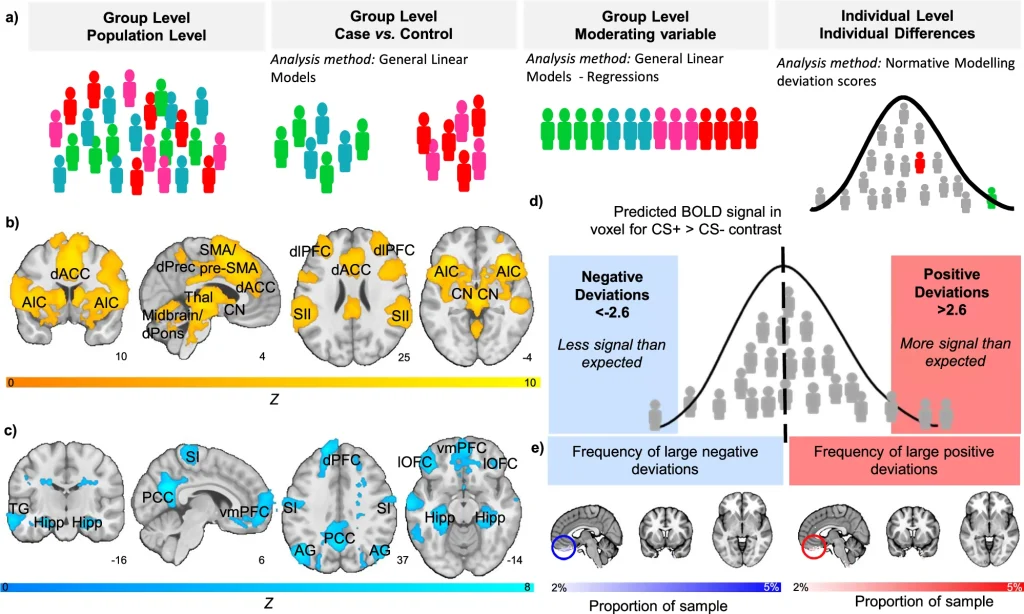
We study the neurobiology of aversive and appetitive learning, with a particular focus on how these processes are represented in the human brain using functional MRI. Because aversive and reward learning are deeply conserved across species, our research has strong translational relevance and helps bridge evidence from human studies and animal models. Ultimately, our goal is to identify the neural mechanisms that contribute to the development and maintenance of mental disorders, and to clarify how alterations in learning processes may shape maladaptive behaviours.
We lead the ENIGMA–Fear Conditioning working group, where we coordinate large-scale, multisite efforts to harmonize data and improve reproducibility in the study of fear learning. In parallel, we collaborate closely with rodent researchers to generate robust cross-species insights, enabling us to connect mechanistic findings in animal studies with neural and behavioural patterns observed in humans.